

Short answer: Marketing attribution models assign credit to different touchpoints in a customer’s journey. Single-touch models give all credit to one interaction (first or last), while multi-touch models distribute credit across multiple touchpoints. The best model depends on your sales cycle length, number of channels, and business goals.
Key takeaways
- Attribution models show which marketing efforts drive results.
- Single-touch models are simple but miss nuance.
- Multi-touch models provide a more complete picture.
- Your choice depends on sales cycle and channel mix.
- No model is perfect; test and iterate.
What you will find here
Marketing attribution models are essential tools for understanding which of your marketing efforts actually drive conversions. Without them, you are making decisions in the dark. Whether you are running paid ads, email campaigns, or content marketing, attribution helps you connect the dots between a prospect’s first click and their final purchase. In this guide, we will walk through the most common attribution models, their strengths and weaknesses, and how to pick the right one for your B2B business.
What Is a Marketing Attribution Model?
A marketing attribution model is a set of rules that determines how credit for a conversion is assigned to different touchpoints along the customer journey. Think of it as a system that answers the question: which channel or interaction deserves the credit for this sale?
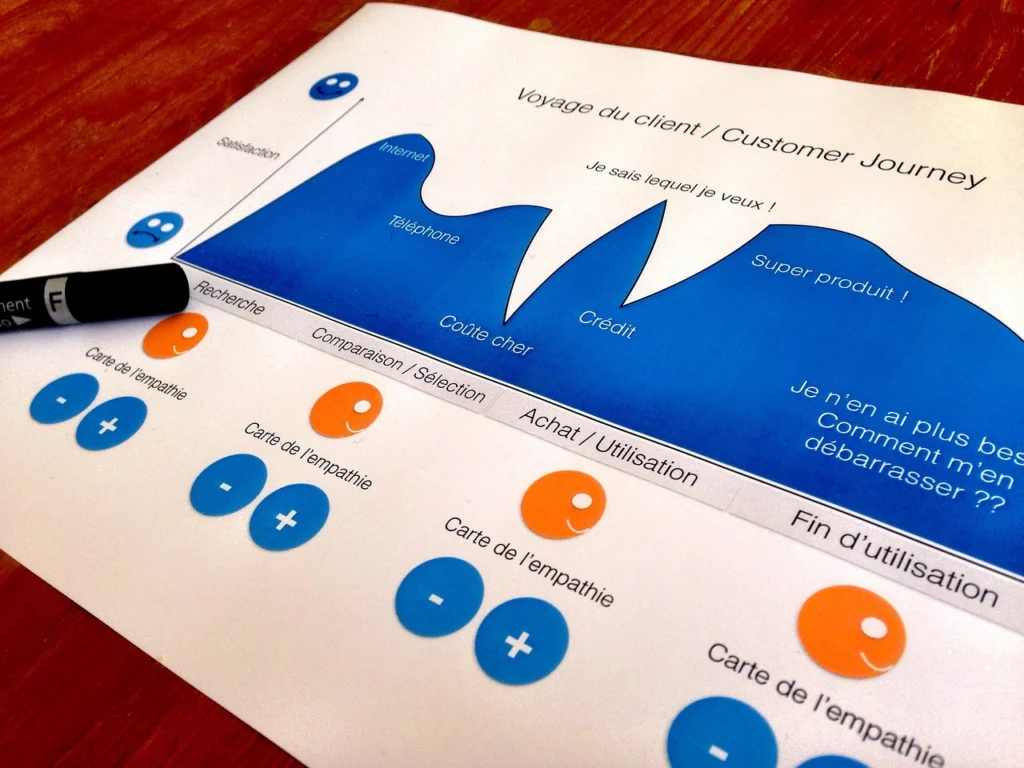
In the real world, a buyer might first discover you through a Google search, then read a blog post, download an ebook, attend a webinar, and finally request a demo. Each of those interactions played a role. An attribution model decides how to split the credit among them.
Without attribution, you might overvalue the last click (the demo request) and undervalue the initial blog post that sparked interest. That leads to misallocated budget and missed opportunities. A clear model brings data-driven clarity to your marketing spend.
Why Attribution Matters for B2B Marketers
B2B purchase cycles are long and involve multiple decision-makers. Your prospects interact with your brand across email, social media, webinars, paid ads, and more. Understanding which channels contribute most to revenue is critical for optimizing campaigns and justifying budget to stakeholders.
Attribution also ties directly to lead scoring. If you know that prospects who attend a webinar are more likely to convert, you can prioritize those leads. For more on that, check out our Email Segmentation Checklist for Better Engagement, which complements attribution by improving how you target leads at each stage.
Furthermore, attribution helps align sales and marketing teams. When both teams agree on how credit is assigned, it reduces friction and fosters collaboration. Something as simple as a shared attribution model can transform how your organization views campaign performance.
Single-Touch Attribution Models
Single-touch models assign all the credit to one interaction. They are easy to implement but often oversimplify the customer journey. Here are the two main types.
First-Touch Attribution
First-touch attribution gives all credit to the very first interaction a prospect has with your brand. For example, if someone clicks a Google ad, then later signs up for a trial and becomes a customer, the ad gets full credit.
When to use it: This model is useful if your primary goal is to understand which channels generate awareness or top-of-funnel leads. It tells you where new prospects first discover you.
Limitations: It ignores every other touchpoint that nurtured the lead. A first touch may spark interest, but it rarely closes a deal alone.
Last-Touch Attribution
Last-touch attribution gives all credit to the final interaction before conversion. In the same scenario, the demo request would get full credit.
When to use it: This is the simplest model and is the default in many analytics tools. It works well if your sales cycle is short and the final step is a clear indicator of intent.
Limitations: It overlooks all the earlier interactions that built trust and educated the prospect. Over-relying on last-touch can cause you to undervalue content marketing and other nurturing efforts.
Multi-Touch Attribution Models
Multi-touch models distribute credit across several touchpoints. They are more complex but provide a more accurate picture of the buyer’s journey.
Linear Attribution
Linear attribution splits credit equally among every touchpoint in the path. If a prospect had five interactions, each gets an equal share of credit.
Pros: Simple to understand and treats all touchpoints fairly. It prevents any single channel from hogging all the credit.
Cons: Not all touchpoints are equally influential. A blog read might be less impactful than a 1:1 sales call, but linear treats them the same.
Time-Decay Attribution
Time-decay attribution gives more credit to touchpoints that happen closer in time to the conversion. The logic is that interactions nearer to the purchase decision are more influential.
Pros: Reflects reality better than linear for longer sales cycles. It rewards the closing activities while still acknowledging early efforts.
Cons: It may undervalue top-of-funnel activities that were critical for initial engagement.
U-Shaped (Position-Based) Attribution
U-shaped attribution gives a large share of credit to both the first and last touchpoints, and the remaining credit is split among the middle interactions.
Pros: Balances the importance of discovery and closing. It acknowledges that both the introduction and the final push matter most.
Cons: The split is arbitrary. The middle interactions that often do the heavy lifting of nurturing get less credit.
| Model | How Credit Is Distributed | Best For |
|---|---|---|
| First-Touch | All to first interaction | Top-of-funnel analysis |
| Last-Touch | All to last interaction | Short sales cycles |
| Linear | Equal split across all | Fair allocation |
| Time-Decay | More weight to recent touches | Long, complex journeys |
| U-Shaped | Larger share to first and last | Balanced view |
If you are still deciding between marketing and sales tools, our guide on Marketing Automation vs CRM: Which Do You Need First? can help you build the tech stack that supports attribution data collection.
How to Choose the Right Attribution Model
There is no one-size-fits-all answer. The best model depends on three factors: your sales cycle length, the number of channels you use, and your primary business objective.
Short cycles (days): Last-touch or first-touch may be sufficient. Most B2B cycles are longer, so these models work best for B2C or simple conversions like ebook downloads.
Long cycles (months): Time-decay or U-shaped models are better. They acknowledge the journey is a process, not a single event.
Many channels (5+): Multi-touch models are essential. With many touchpoints, single-touch models miss too much.
Goal is awareness: Use first-touch. If you want to know what drives initial interest, this is your model.
Goal is conversion: Use last-touch or time-decay. For example, if your primary KPI is demo requests, the final touch matters most.
Begin with a simple model. Track for a few months, then compare with a more complex model. Many teams run two models simultaneously: one for reporting (e.g., last-touch) and one for optimization (e.g., time-decay). This gives you both simplicity and insight.
Common Pitfalls and How to Avoid Them
Attribution is powerful, but it has traps. Here are the most common mistakes and how to sidestep them.
Over-reliance on one model: The perfect model does not exist. Treat attribution as a guide, not a rulebook. Use it to ask better questions, not to find absolute truth.
Ignoring offline touchpoints: If your sales team makes phone calls or attends trade shows, those interactions matter. Include them in your model if possible, or at least acknowledge their impact qualitatively.
Data silos: If your CRM and analytics tools do not talk, attribution breaks. Ensure you have a unified data pipeline. This often requires integration between marketing automation and CRM — areas covered in our article on B2B Lead Generation vs Demand Generation: Key Differences.
Treating all conversions equally: A lead form submission is not the same as a closed-won deal. Weight your attribution by revenue or deal size to get a clearer picture of ROI.
Not revisiting your model: As your business grows, your attribution needs may change. Review your model annually and adjust if your buyer behavior or channel mix shifts significantly.
Getting Started with Attribution
Start small. Pick one model that aligns with your main objective. For most B2B companies new to attribution, the U-shaped or time-decay models offer a good balance of accuracy and simplicity.
Set up tracking in your analytics platform. Many tools like Google Analytics offer built-in attribution reports. For more advanced use, consider dedicated attribution software that integrates with your CRM and marketing automation.
Monitor your results monthly, but avoid making major budget changes based on less than three months of data. Attribution is a long-term game. The insights compound as you collect more data and refine your approach.
Share your findings with sales and leadership. Attribution is not just a marketing tool — it is a business intelligence tool. When everyone understands which channels drive revenue, better decisions follow.
Frequently asked questions
What is the simplest marketing attribution model for beginners?
The simplest model is last-touch attribution, which gives all credit to the final interaction before a conversion. It is easy to set up in most analytics tools and works well for short sales cycles. However, it can misrepresent the customer journey by ignoring earlier touchpoints.
How does multi-touch attribution differ from single-touch?
Single-touch models assign 100% credit to one interaction, either the first or last touch. Multi-touch models distribute credit across multiple touchpoints, offering a more complete view of the customer journey. Multi-touch is better for long B2B cycles but requires more data and setup.
Can I use more than one attribution model at a time?
Yes, many marketers run multiple models simultaneously. For example, you might use last-touch for standard reporting and time-decay for optimizing campaign spend. Comparing models can reveal blind spots and help you make more informed decisions.
What data do I need to implement attribution modeling?
You need a way to track each touchpoint a prospect has with your brand, such as website visits, email clicks, ad clicks, and form submissions. This requires analytics tools, UTM parameters, and ideally a CRM that logs interactions. Clean, consistent data is essential for accurate attribution.
How often should I review my attribution model?
Review your model at least once a year, or whenever there is a significant change in your marketing strategy, sales cycle, or channel mix. Attribution is not set-and-forget; as your business evolves, your model may need adjustments to remain relevant.
Leave a Reply